Stemtree of Spring TX After School Stem Programs: Schedule, Learn, Grow
The hours after the final bell ring feel like a doorway into a different kind of learning. Not homework or test prep, but a place where curiosity is the currency and hands-on work builds real confidence. In Spring, Texas, Stemtree has become that doorway for many families. The after school stem programs offered by Stemtree of Spring TX blend practical problem solving with a culture of collaboration. Students arrive with questions and leave with a toolkit they can apply at home, in the classroom, or beyond.
What makes Stemtree stand out in a crowded field of enrichment options is less about the glossy pitch and more about the day-to-day texture of the program. It is the patience of a mentor guiding a group through a robotics challenge, the precision of a coding task that finally yields a working program, and the way a shy student lights up when a project finally clicks. The long arc of involvement—weeks, months, even years—translates into measurable growth that parents and students feel in real time.
A practical starting point is recognizing that after school programs must fit a family’s rhythm just as they fit a student’s learning style. For many families in and around Spring, the day does not end with a single activity. Transportation windows, sibling schedules, and aftercare needs all braid together to shape what an after school STEM program is able to do. Stemtree’s scheduling model tries to honor that complexity by offering multiple time slots, occasional open lab hours for independent work, and structured cohorts that progress at a pace appropriate to each age group. The result is a program that can be both predictable for planning and flexible enough to accommodate the unpredictable realities of family life.
From the earliest days, the tone is set by mentorship rather than instruction for instruction’s sake. In the best moments, instructors become co-learners, modeling the mindset that in STEM, a mistake is not a failure but a data point. The shift from “I can’t” to “What can I try next?” happens slowly, with careful scaffolding and the occasional nudge toward a more deliberate design process. Students learn to articulate hypotheses, test ideas with small experiments, and interpret results without theatrics or drama. This is not merely about producing a successful project; it is about cultivating a way of thinking that becomes more automatic over time.
A closer look at what a typical week feels like in Stemtree’s Spring TX programs reveals how the pieces fit together. Most students enroll in two or three post-school sessions per week, depending on age and interest. The younger cohorts begin with foundational projects that emphasize tactile learning and visual feedback, while older students take on more complex challenges that demand planning, collaboration, and iterative refinement. The structure is intentionally modular. Each session builds on prior discoveries yet is designed so that a student can join mid-semester and still feel capable, connected, and challenged.
The first thing you notice is the careful sequencing of activities. A session may start with a quick check-in, where students share a small win from the week or describe a stumbling block. Then there is a brief demonstration or challenge designed to spark curiosity. The rest of the time is spent actively engaging with materials—robot kits, microcontroller boards, or coding environments—while mentors circle the room, listening for moments when a student’s thinking needs to be broadened or sharpened. The goal is not to race to a finished product but to let the process unfold with enough structure to prevent frustration and enough space to invite genuine exploration.
A number of practical threads thread through the curriculum. Coding gets introduced not as abstract syntax but as a way to solve problems students already care about. A student who loves gaming, for example, might design a simple game mechanic to illustrate a probability concept. A student who is fascinated by aerospace might build a model rocket or simulate a micro weather station. The projects are often cross-disciplinary, blending math, engineering, art, and storytelling. In this way, Stemtree reinforces how STEM knowledge sits at the intersection of many everyday interests rather than existing as a separate silo.
One challenge families often raise is how to measure progress in after school STEM programs. Traditional grades rarely capture the nuance here. The best indicators come from concrete artifacts: a robot that completes a task more reliably than it did at the start of the term, a functioning app that a student can demonstrate to a family member, or a design portfolio that documents iterations and refinements. In practice, mentors at Stemtree maintain a lightweight, ongoing narrative about each learner. They note turning points, such as a moment when a student stops seeking constant help and begins troubleshooting with independence. They record features of collaboration that improved as the cohort matured, such as clearer roles, shared planning, and better documentation of code or hardware changes. This transparency matters for parents who want to understand not only what their child did but how they grew through the process.
The physical space matters as well. Stemtree’s Spring TX center is designed to invite experimentation while providing safety rails that prevent frustration from escalating into discouragement. Workstations are arranged to encourage peer-to-peer assistance, with a generous mix of open bench space and focused, task-specific areas. There is a dedicated coding nook with swings in the background of a friendly buzz, a robotics zone equipped with accessible kits, and a small lab area for sensors, circuits, and microcontrollers. Lighting is soft but sufficient, and storage is organized so that students can retrieve exactly what they need without losing time looking for parts. The impact of a well-organized space should not be underestimated; it reduces cognitive load, making it easier for students to concentrate on the task at hand and stay engaged for longer stretches.
Parent communication is another pillar of a healthy program. The best after school STEM experiences are not black boxes. They are transparent about what students are learning and why it matters. Stemtree communicates through brief progress notes, monthly showcase events, and optional family sessions that help explain core concepts in approachable terms. The showcases are particularly meaningful because they transform a private classroom achievement into a shared family moment. Watching a child explain a prototype to a room full of curious adults, or see siblings cheer as a robot completes a task, reinforces the social value of STEM learning. It is not merely about the project; it is about belonging to a learning community that values curiosity, perseverance, and collaboration.
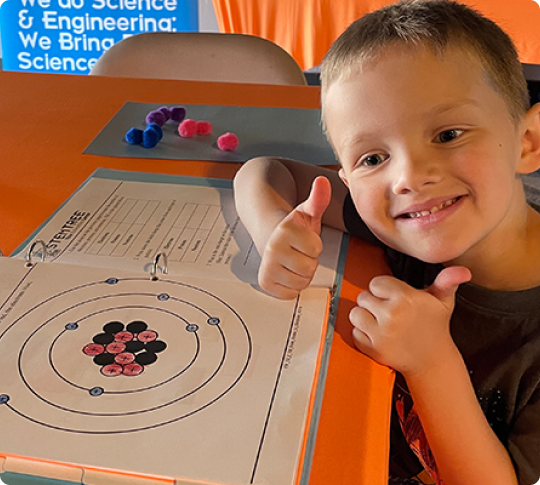

The long horizon matters as well. For families who commit to multiple terms, the trajectory becomes almost a ritual. Students accumulate portfolio pieces that can be revisited for college or career conversations years down the line. Even younger students begin to frame their interests in the language of projects and outcomes, which makes the transition to higher-level coursework less jarring later on. For many families in Spring TX, the after school STEM pathway at Stemtree is not a one-off enrichment activity but a strategic choice. It supports academic confidence, nurtures technical fluency, and, perhaps most importantly, creates a habit of sustained curiosity.
To ensure accessibility, Stemtree offers options that address different financial and logistical needs. Scholarships or sliding-scale rates exist at times, and some families benefit from flexible scheduling that accommodates work shifts or transportation windows. The programs are designed with inclusivity in mind, aiming to welcome students with varying levels of prior exposure to STEM. A student who arrives with limited experience should feel just as capable of contributing as a student who comes in with a long history of robotics clubs. The mentors welcome this diversity and leverage it as a strength, encouraging peer mentoring and collaborative problem solving.
The question of how to choose the right pathway can feel overwhelming. Families often juggle multiple potential entry points: coding classes, robotics, and broader stem topics that integrate science and engineering principles. Stemtree’s approach leans into a portfolio orientation rather than a single track. Students are encouraged to explore across domains before settling into a deeper specialization. This exploratory phase has value, because it helps prevent early tunnel vision and supports longer-term engagement. A student who experiments with both robotics and coding often discovers an interest they might not have identified through a single track, which increases the likelihood of sustained participation.
In practice, the schedule is designed with life in mind. After school programs thrive when they offer predictability, but they also need the flexibility to adapt to family and community rhythms. Stemtree recognizes this by providing consistent weekly blocks while leaving room for occasional workshops or extended lab times during school breaks. The ability to shift gears without disrupting the core routine helps maintain continuity for learners who might otherwise drift away during a busy season. For parents, this balance translates into a predictable cadence you can count on when planning after care, transportation, and siblings.
With all this in mind, the most meaningful outcomes tend to be the quiet, cumulative ones. It is not the single spectacular project that stands out but the steady accretion of confidence, persistence, and collaboration. A student who learns to navigate a failure in a robotics build becomes more resilient in math class, where a tricky concept can be deconstructed into a sequence of small, testable hypotheses. A coder who learns to document their process clearly might be better prepared for future coursework that demands rigorous communication of ideas. The ripple effects extend beyond the classroom, shaping study habits, teamwork, and a growth mindset that can anchor a student through challenging times.
What makes Spring TX a particularly interesting environment for after school STEM work is the community ecosystem surrounding it. Local schools often collaborate with after school programs through shared projects or joint showcases, amplifying the impact beyond the walls of a single center. Parental networks, community mentors, and regional competitions create a social texture that complements the technical curriculum. Students gain not just technical skills but an expanded sense of what it means to contribute to a community of practice. The sense of belonging matters as much as the technical competence; the two reinforce each other in ways that can be transformative over several years.
For families weighing the decision, a practical cost-benefit lens helps. The benefits are manifold but often diffuse at first glance: stronger problem-solving muscles, greater persistence in the face of difficulty, improved collaboration skills, and a deeper sense of curiosity about how things work. The costs are more tangible: time, money, and the need to juggle a busy calendar. The key is aligning expectations. If a family sees STEM learning as a path to better study habits, higher engagement in science and math, and a portfolio of demonstrable work, the value becomes clearer. If the expectation is a quick badge or a single dazzling project, the program may feel underwhelming. Real growth accrues through sustained participation, with mentors helping students connect the dots between what they do in the lab and what they experience in everyday life.
A note on accessibility and equity is important here. The most successful programs actively seek to lower barriers to entry. That can mean offering scholarships, providing transportation assistance, or adjusting the pace to support learners who need extra time. It can also involve diversifying the projects to reflect different cultural experiences and interests. When a center welcomes students who bring varied perspectives, the group learning dynamic becomes richer. Students learn not only from instructors but from each other, gaining empathy and a more nuanced understanding of how STEM applies across different communities.
The idea of growth in a setting like Stemtree is not a straight line. It is more like a constellation: individual points that glow brighter as they connect through shared projects, feedback loops, and peer mentoring. Some weeks, progress will feel incremental; other weeks, a spark of breakthrough will illuminate several weeks of effort. The role of mentors is to stay attuned to both those moments and the quiet, daily practice that builds competence. They celebrate small wins publicly and offer constructive guidance when a student gets stuck. The aim is to cultivate a learning culture where curiosity is not dependent on instant success but sustained by thoughtful experimentation and reflective practice.
For parents new to Stemtree of Spring TX, there are a few practical steps to get started. First, visit the center during an open house or a trial session to observe how mentors interact with students and how students engage with the materials. Pay attention to how the space supports concentration and collaboration, how the staff manages transitions between activities, and how the students talk about their projects. Next, consider a two- or three-term commitment if possible. Early exposure yields the richest gains when it is not interrupted by episodic gaps. Finally, engage with the portfolio discussions and showcase events. These moments reveal not only what the student has accomplished but how they interpret their own growth. They are windows into the student’s evolving voice as a learner.
Beyond the surface, what makes Stemtree in Spring TX meaningful is the alignment between the learning design and real world practice. Students are rarely asked to memorize formulas without context. They are invited to see how a line of code translates into a behavior in a simulation, or how a sensor reading can drive a physical response. They learn to test hypotheses with evidence and to adjust their approach when results do not match expectations. This is authenticity in education, a quality that shapes not just skill but also character. It is a kind of education that does not pretend learning is easy, but that acknowledges obstacles as essential parts of the journey.
If you are a student who wants to begin or deepen a STEM journey through Stemtree, a few tips can help you get the most from the experience. Be curious, not just about answers but about how you arrive at them. Practice explaining your thinking aloud when you code or assemble a robot; this habit sharpens your own understanding and makes it easier for mentors to spot where you might need a nudge. Seek feedback actively and frame it as information you can use to improve, not as a judgment on your abilities. When you hit a rough patch, document what you tried and what happened next. The act of recording your process is in itself a powerful learning tool, and over time it becomes a personal playbook you can revisit.
The journey through Stemtree’s after school programs is not a sprint. It is a careful, intentional cultivation of curiosity that compounds. Students who stick with it tend to show up with three things intact: a willingness to grapple with complexity, a habit of testing ideas, and the resilience to persevere when results are not immediate. The community supports this growth, but the work remains fundamentally internal. A student must choose to invest attention, to engage with mentors respectfully, and to collaborate with peers with honesty and generosity. When those choices are made consistently, the impact shows up in school, in future STEM pursuits, and in how a learner approaches daily challenges.
For families considering the Spring TX Stemtree center, the question is about fit as much as it is about content. The content matters, but the ongoing mentorship, the learning culture, and the practical, real-world projects make all the difference. If your child loves to tinker, build, code, or test ideas in a sandbox environment that respects curiosity while offering clear channels for feedback, Stemtree is a compelling option. The programs are not about turning every child into a robotics engineer or a software developer overnight. They are about providing a scaffold that helps students see themselves as capable learners who can shape their own path in STEM through effort, collaboration, and thoughtful problem solving.
Two short checks can help you decide if this is the right moment to invest in after school STEM with Stemtree. First, assess willingness to engage beyond the core session. A student who is curious and wants to continue exploring at home or in other community settings will likely thrive here. Second, look for opportunities to connect the student’s interests to a concrete project. If there is a clear through line—from a favorite game to a simple coding project, or from a fascination with how engines work to a small robotics build—the alignment is strong. When both conditions hold, the experience tends to feel less like a program and more like a joint mission between student, family, and mentor.
The field of after school STEM education is evolving. Centers like Stemtree in Spring TX are responding by blending robust curricula with a deeply human approach to learning. They recognize that technology changes rapidly, but the core human capacities—curiosity, collaboration, and perseverance—remain timeless. In classrooms and labs across the center, those values are not slogans but lived practices. Students learn to iterate, to seek feedback, and to pivot with purpose when a plan does not unfold as expected. The result is a child who leaves each session a little more capable, a little more confident, and a lot more curious about what comes next.
If you want to see the impact firsthand, you can expect a friendly welcome and a transparent path to involvement. The schedule is designed to be navigable on a busy calendar, with enough flexibility to handle typical life in a Spring TX household. The instructors are patient guides who balance encouragement with accountability, aiming to cultivate a climate where mistakes become a natural part of learning rather than a sign of failure. This is the core of Stemtree’s approach: a learning environment where students feel safe to push the boundaries of what they can do and to grow through the process of trying, failing, and trying again.
In short, Stemtree of Spring TX after school stem programs offer something beyond cookie cutter enrichment. They provide a living, evolving space where students craft a practical understanding of STEM while building confidence in their own abilities. The programs encourage creative risk taking, disciplined problem solving, and the kind of teamwork that makes even the most ambitious projects possible. For families who want more than rote practice and who seek a pathway that respects a student’s pace while pushing toward meaningful outcomes, Stemtree stands as a compelling option in the Spring TX landscape.
A final reflection comes from the daily cadence inside the center. You can observe a room that hums with activity yet feels orderly, a space where mentors guide without dominating, and where students pursue ambitious ideas with careful hands. The sense you notice most is not the glitter of a single breakthrough but the quiet confidence that accumulates when a student knows they can rely on a process that makes sense to them. When a student finishes a project and describes it with clarity, you hear the quiet revolution of experience speaking through them. It is this, more than anything, that signals the value of Stemtree’s after school programs in Spring Texas.
In the end, the decision to join stems from values as much as from outcomes. It is about investing in a space where curiosity is welcomed, effort is acknowledged, and growth is visible to those who watch closely enough to notice the small, steady gains. If your goal is to help a learner cultivate practical skills that map onto real-world situations, while also developing the character traits that support long-term success, Stemtree offers a compelling, thoughtfully designed pathway. The journey is ongoing, and the early steps you take with Stemtree in Spring TX lay the groundwork for a future where curiosity has room to breathe and ideas have room to grow.
Two practical checklists to consider as you plan your family’s next steps with Stemtree:
-
Scheduling and logistics
-
Find a time slot that aligns with school and aftercare
-
Check available cohort options for your child’s age group
-
Confirm transportation arrangements or aftercare compatibility
-
Block out a trial session to observe the environment and mentors
-
Mark a multi-term commitment if possible to maximize growth
-
Learning orientation and goals
-
Talk with your child about interests they want to explore
-
Identify a small, concrete project to start with
-
Set a simple milestone for the first month
-
Plan at least one family showcase or demonstration opportunity
-
Review progress together and adjust goals as needed
If you are curious to explore further, stemtree.com offers a gateway to more information about kids coding classes and robotics classes for kids in the Spring TX area. The site is a resource for families who want to understand the breadth of what is possible, from coding classes to more hands-on engineering and robotics experiences. The program’s philosophy remains anchored in the practical, the tangible, and the collaborative, with real world outcomes that parents can observe and learners can feel. The journey is collaborative, and every student contributes a unique thread to the larger tapestry of discovery and achievement.
The Spring TX after school STEM landscape benefits greatly when families engage with it thoughtfully. Children who see their learning mirrored in a supportive community are more willing to take risks, ask questions, and persevere through challenges. Stemtree’s approach—balanced, rigorous, and compassionate—creates a fertile ground for that kind of engagement. The long view matters here: it is not about a single project or a brief moment of triumph, but about building a durable mindset that will serve students in discover more high school, college, and beyond. In the hands-on arenas of coding, robotics, and STEM exploration, the work is never simply about parts and programs. It is about cultivating capable, curious, resilient learners who will lead with curiosity into whatever field they choose.